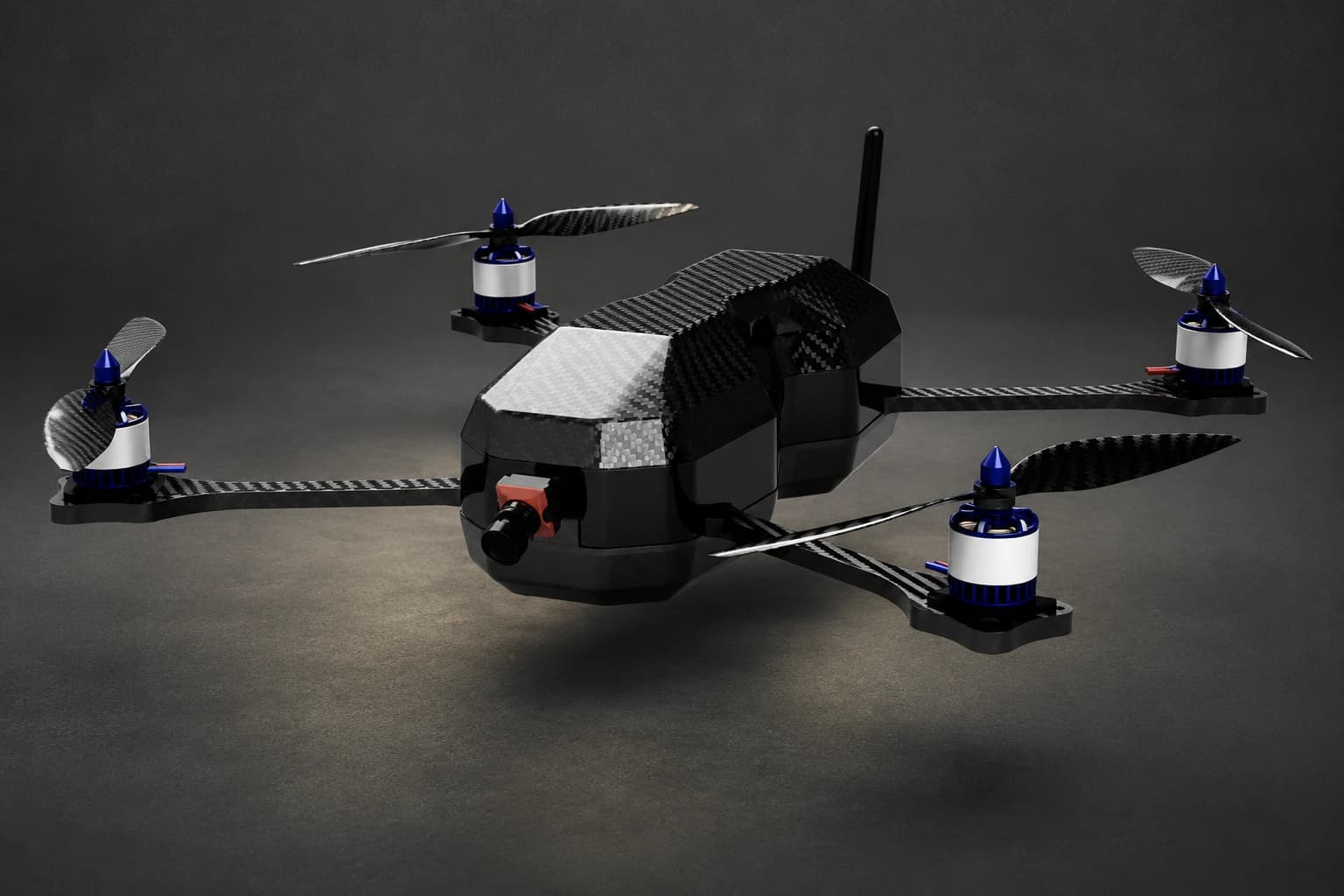
In a UAV, every gram of structure is a gram less payload or battery. Carbon fiber is the natural choice for airframes, but the best designs use it deliberately: the right semi-finished product for each part, laminates designed for stiffness, and details that account for vibration and electronics.
Design for stiffness first
Most UAV structures are limited by stiffness rather than strength. Arms that bend under thrust or frames that twist affect flight control and can excite vibration. Designing for deflection — not only for breaking load — usually leads to a lighter airframe that flies better.
Choosing the right form
- Tubes are extremely efficient for arms, booms and spars. Fibers along the axis give bending stiffness; plies at ±45° add torsional stiffness.
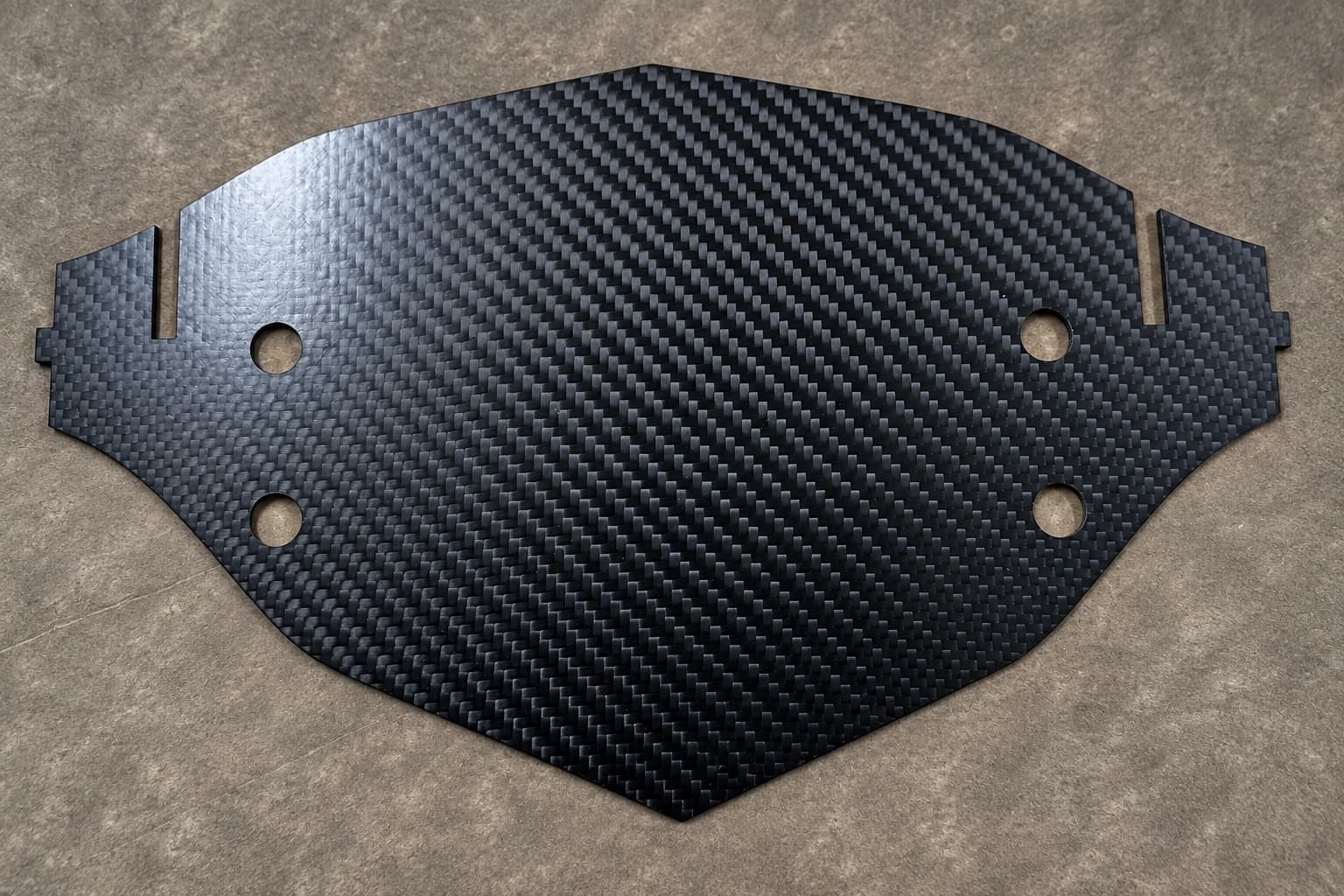
- Flat plates cut by CNC or waterjet are ideal for frame plates, mounts and brackets — fast to iterate and without mold costs.
- Sandwich panels with PMI foam or honeycomb cores give very stiff, light structures for larger flat parts, fuselage panels and wings.
- Molded shells are used for fuselages and aerodynamic covers once the design is stable.
Vibration
Motors and propellers generate vibration at frequencies that change with rotational speed. If a natural frequency of the structure is close to these excitation frequencies, resonance amplifies the vibration — which disturbs sensors and the flight controller. A stiff, light structure moves natural frequencies higher, while soft mounts isolate sensitive electronics. Both should be considered early in the design.
Joints, inserts and hardware
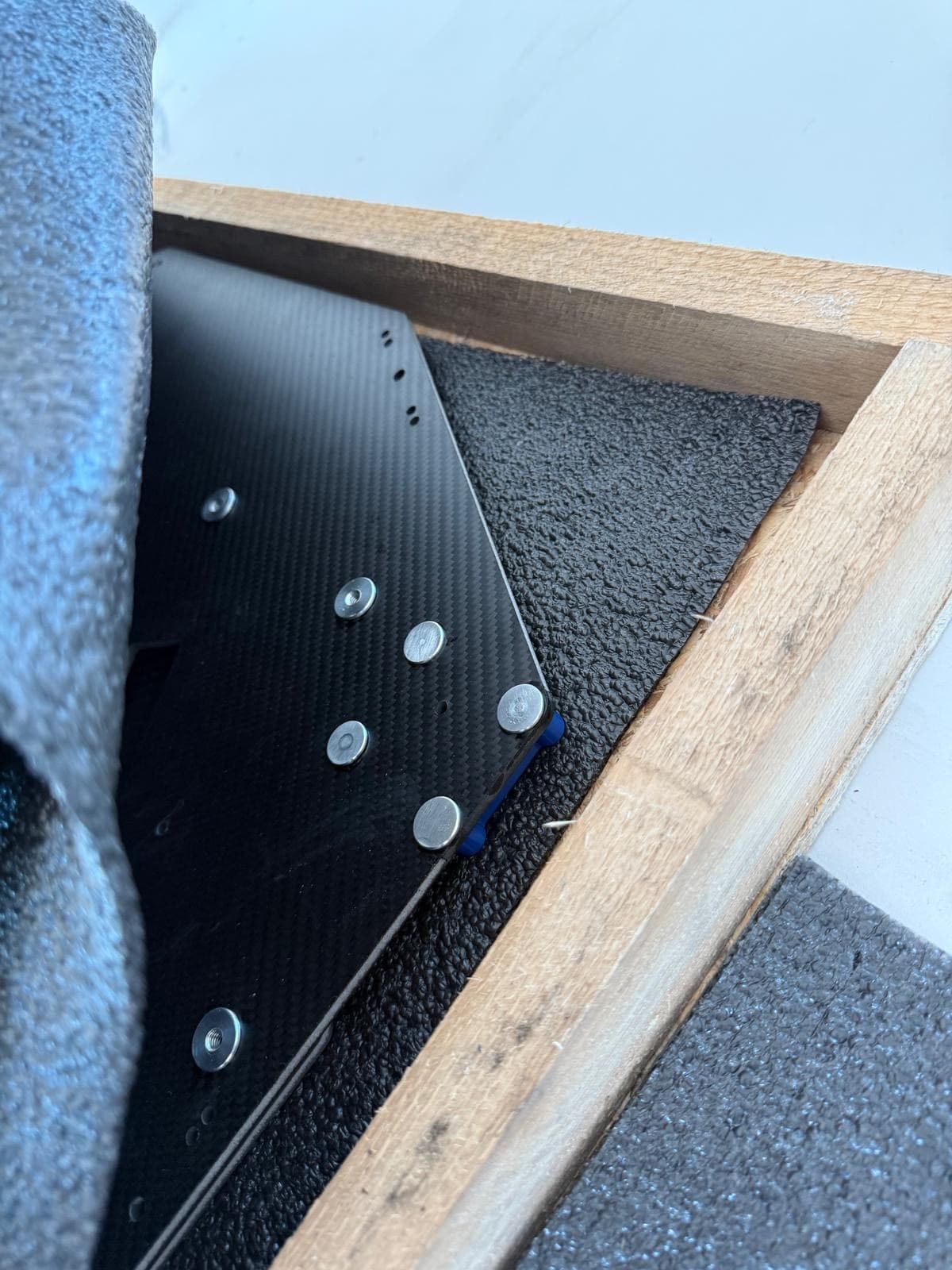
Composites do not like concentrated loads. Bolted joints in plates or sandwich panels need sufficient edge distance, local reinforcement or bonded inserts to spread the load. Where aluminum parts are bonded or bolted to carbon, they should be isolated to prevent galvanic corrosion.
Electronics and radio signals
Carbon fiber is electrically conductive and attenuates radio signals. GNSS, radio link and telemetry antennas should have a clear view, away from carbon surfaces, or sit behind radio-transparent windows made of glass fiber or other non-conductive materials. Cut carbon edges can chafe cable insulation, so cable routing should be protected.
From prototype to series
UAV programs iterate quickly. Starting with CNC-cut plates and standard tubes allows fast testing; once the geometry is stable, molds for shells and sandwich parts bring repeatability and lower weight. Keeping engineering, prototyping and production with one supplier avoids redesigns during this transition.
Checklist for your next airframe
- Define stiffness targets for arms and frame, not only strength.
- Choose tubes, plates, sandwich or molded shells per part.
- Plan inserts and reinforcement at every bolted joint.
- Keep antennas clear of carbon and protect cables at cut edges.
- Check natural frequencies against motor and propeller speeds.
At X CarbonTech we support UAV developers along this path — carbon tubes, frame plates, PMI sandwich panels and molded parts, engineered and produced in-house.
Related capabilities
Discuss your application with an engineer
Questions about materials or processes for your part? We are happy to help.
Request a Quote