Aluminum is the default material for lightweight parts: easy to machine, affordable and well understood. Carbon fiber reinforced polymer (CFRP) can be significantly lighter and stiffer — but only when the part is designed for it. Here is how we look at the decision in practice.
Density and weight
A typical carbon/epoxy laminate has a density of around 1.5–1.6 g/cm³, compared with about 2.7 g/cm³ for aluminum alloys. For the same volume, a carbon part weighs roughly 40% less. The real saving depends on the design: because composites are tailored to the load, wall thickness and fiber layout can be optimized so that material is only where it is needed.
Stiffness and strength per kilogram
The real advantage of carbon fiber is specific stiffness and strength — performance per unit of weight. Along the fiber direction, carbon laminates can be far stiffer and stronger than aluminum of the same weight. The key word is direction: composites are anisotropic, so a laminate is only as good as its fiber orientation.
- Unidirectional plies give maximum stiffness in one direction — ideal for tubes, arms and beams.
- Woven and multiaxial fabrics spread properties across several directions for plates and shells.
- Quasi-isotropic layups behave similarly in all in-plane directions, closest to a metal part.
Fatigue and corrosion
Carbon composites have excellent fatigue resistance and do not corrode, which makes them attractive for parts exposed to vibration, moisture or salt water. One point needs attention: when carbon touches aluminum in the presence of moisture, galvanic corrosion attacks the aluminum. Bonded or bolted aluminum parts should be isolated, for example with a glass fiber layer, sealant or a suitable coating.
Impact and damage behavior
Aluminum dents; carbon laminates can crack or delaminate under impact, sometimes without visible damage on the surface. For parts exposed to impact, hybrid layups with aramid (Kevlar®) fibers or a tougher resin system improve damage tolerance.
Manufacturing and cost
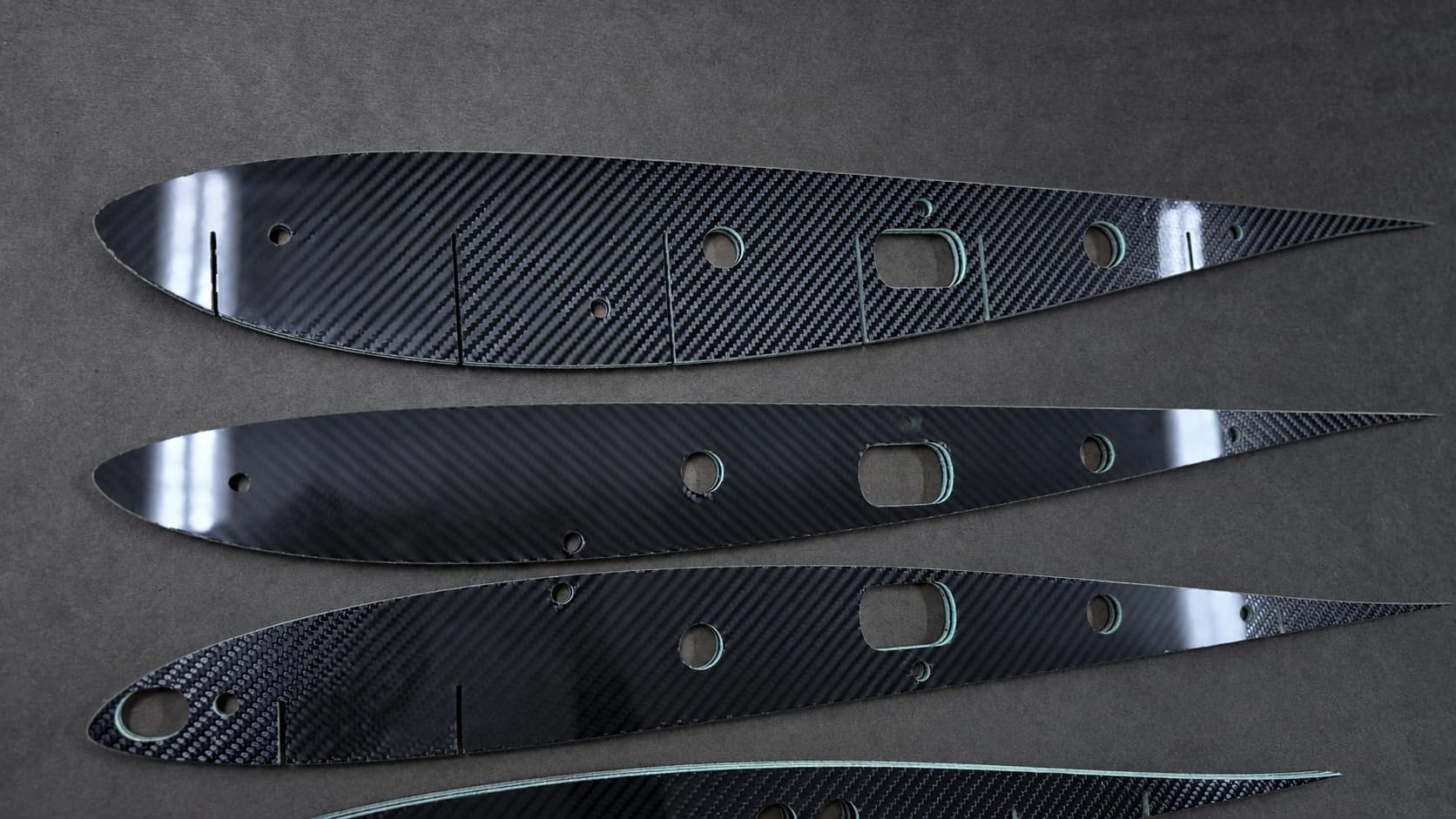
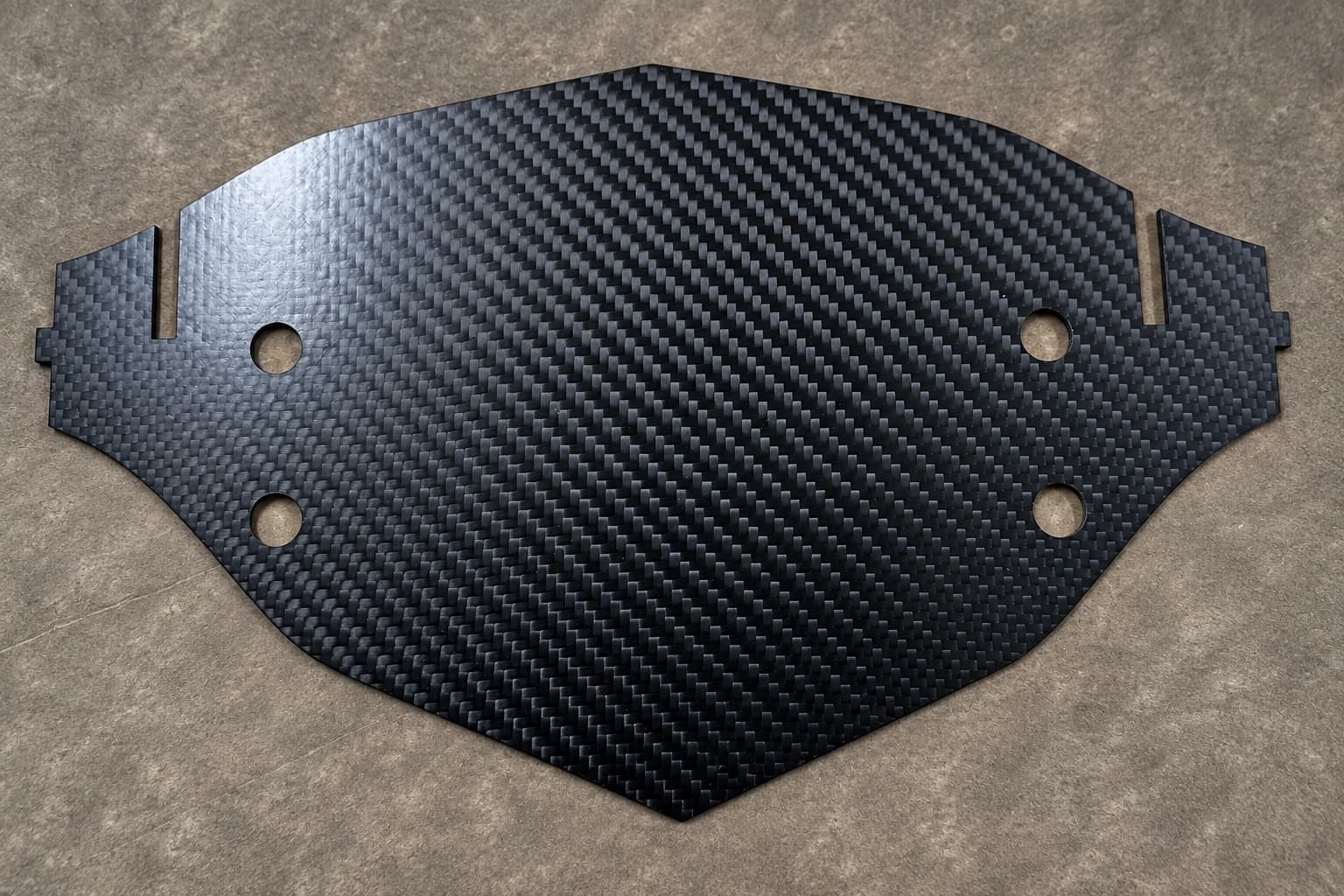
A simple bracket machined from aluminum plate is quick and inexpensive. A shaped composite part needs a mold, layup and curing, so tooling cost has to be justified by weight savings, performance or volume. For flat parts, CNC- or waterjet-cut carbon plates are a cost-effective middle ground: no mold is needed.
| Criterion | Aluminum | Carbon fiber (CFRP) |
|---|---|---|
| Density | ≈ 2.7 g/cm³ | ≈ 1.5–1.6 g/cm³ |
| Properties | Same in all directions | Tailored to fiber direction |
| Corrosion | Needs protection in harsh environments | Does not corrode |
| Fatigue | Moderate | Excellent |
| Tooling | Usually none for machined parts | Mold for shaped parts; none for flat plates |
| Best for | Simple parts, low cost, fast changes | Weight- and stiffness-critical parts |
When to switch to carbon fiber
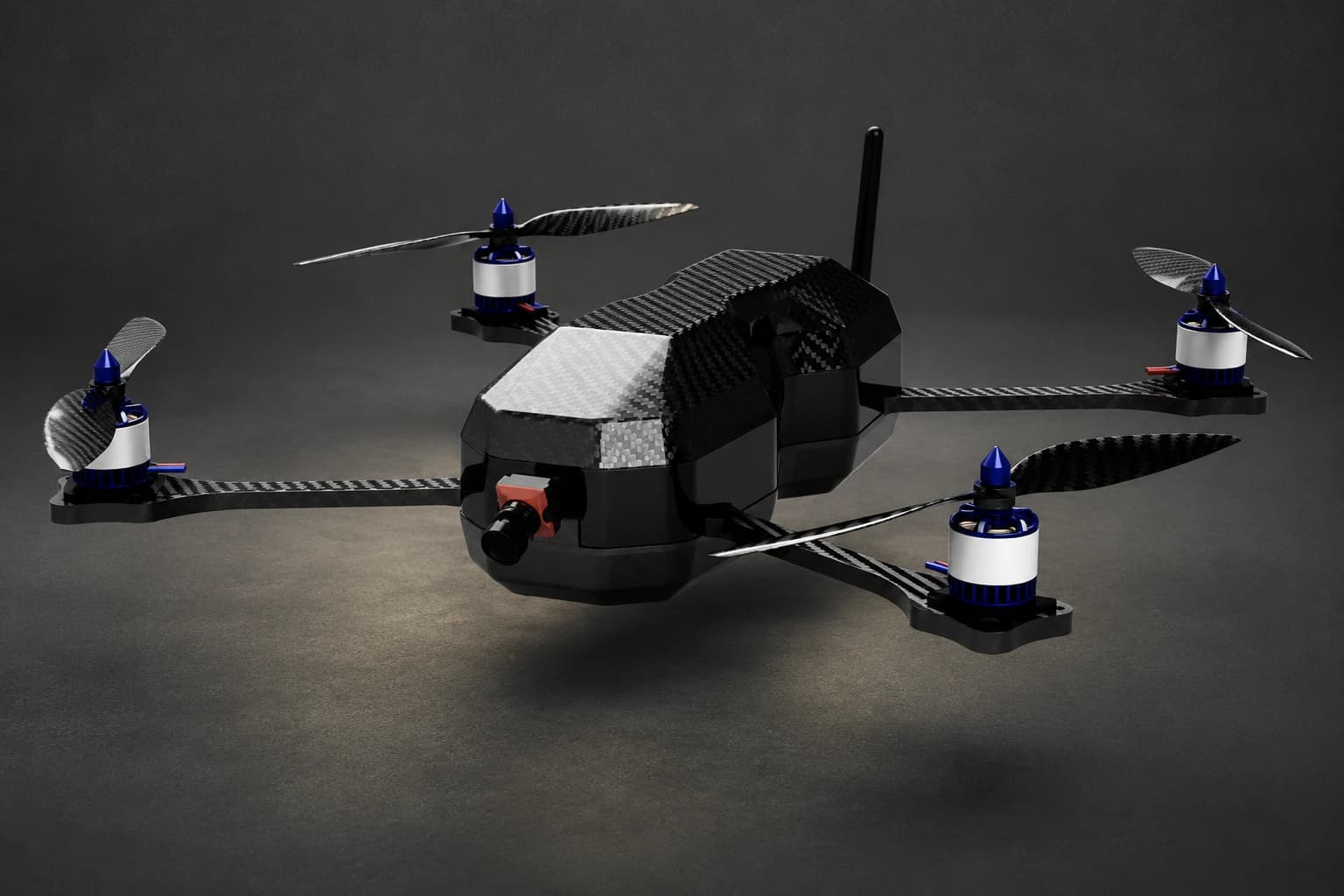
- Weight directly affects performance — flight time, acceleration, energy use or handling.
- The part is stiffness-critical, such as arms, frames, beams or large panels.
- The environment is corrosive or the part sees continuous vibration.
- Visual quality matters and a carbon surface adds value.
If aluminum is sufficient, it is often the pragmatic choice. When weight and stiffness drive performance, carbon fiber wins — provided the part is engineered as a composite rather than copied from a metal design.
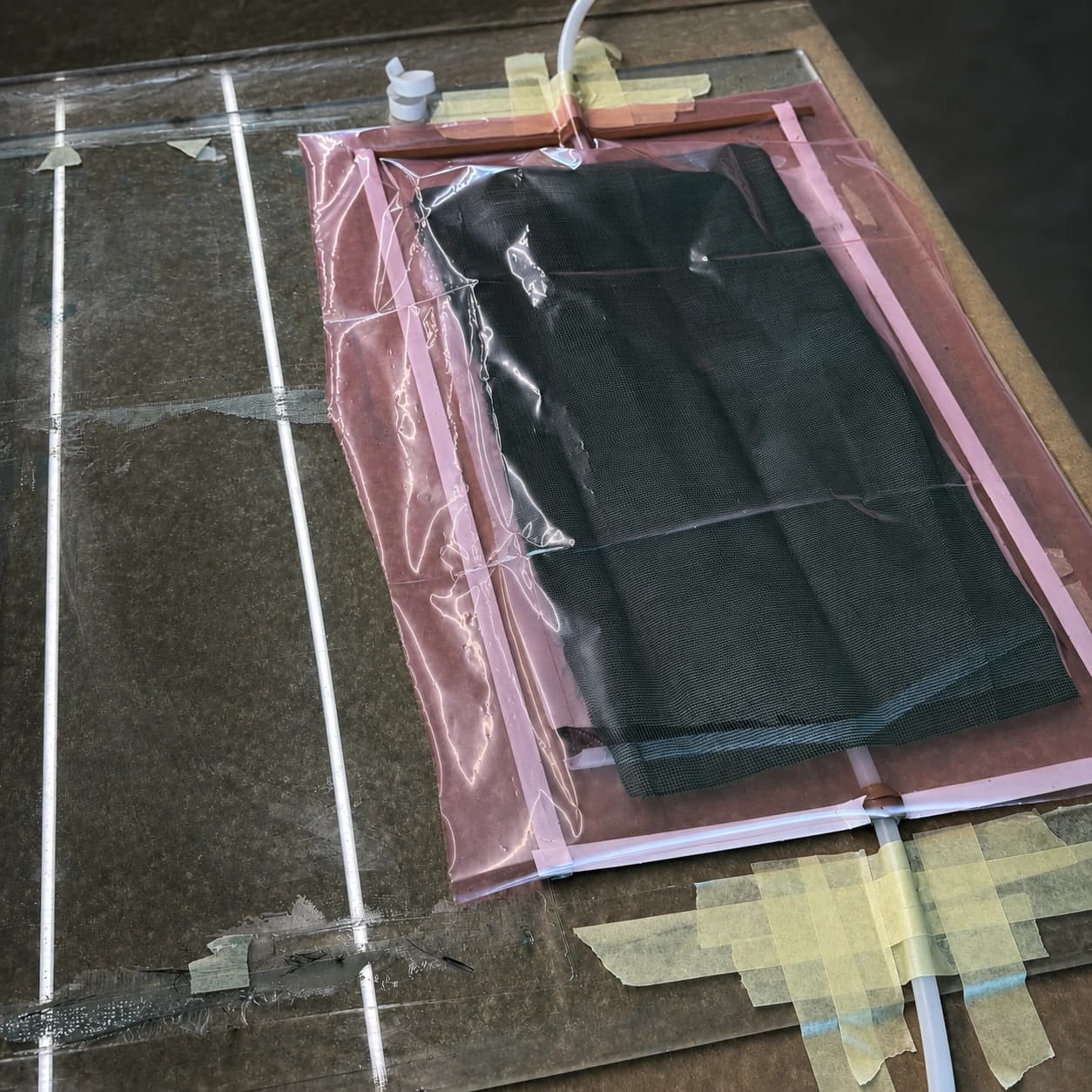
At X CarbonTech we help you make this decision early: we review your requirements, recommend material and process, and produce the part in-house — from machined carbon plates to infused composite structures.
Related capabilities
Discuss your application with an engineer
Questions about materials or processes for your part? We are happy to help.
Request a Quote