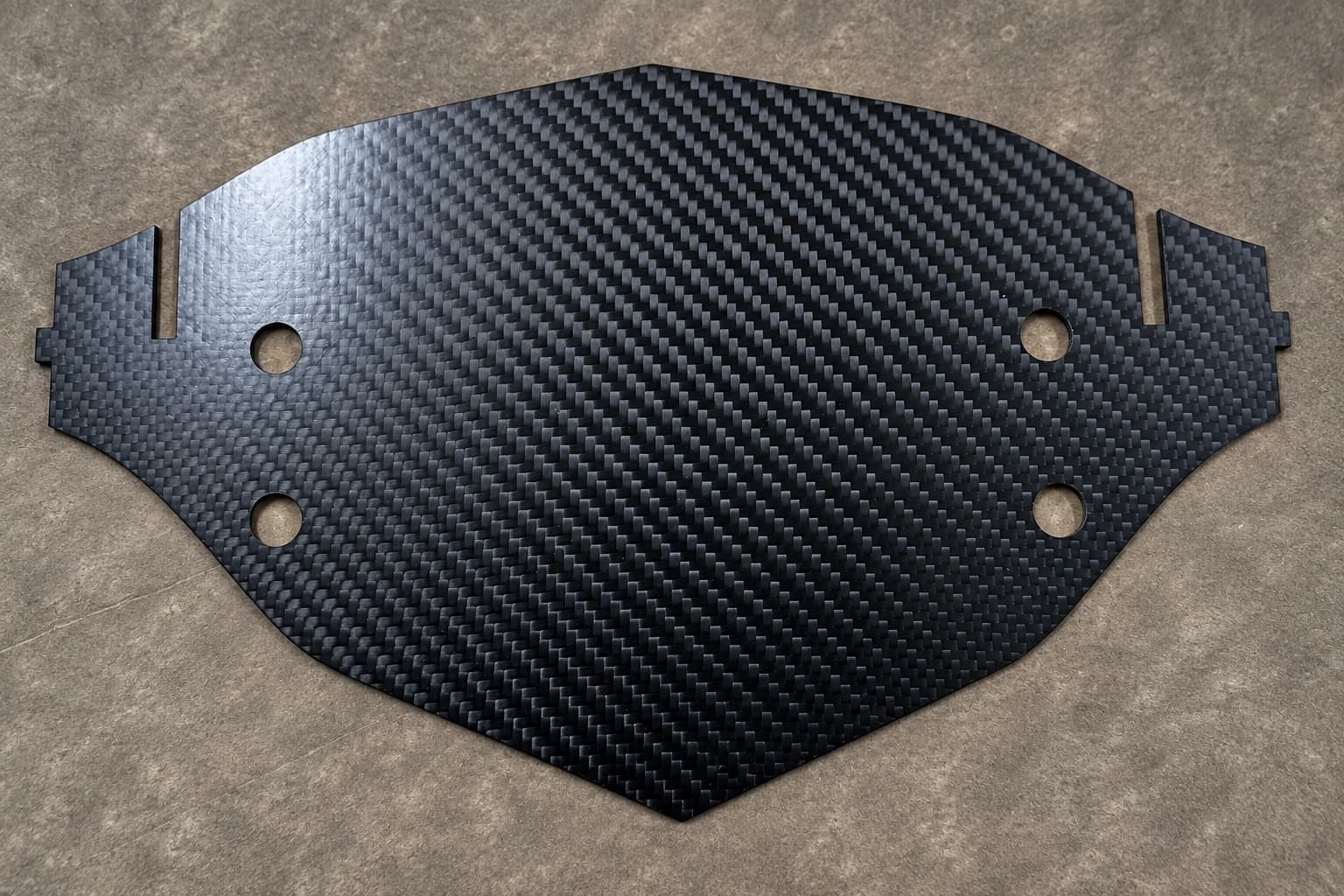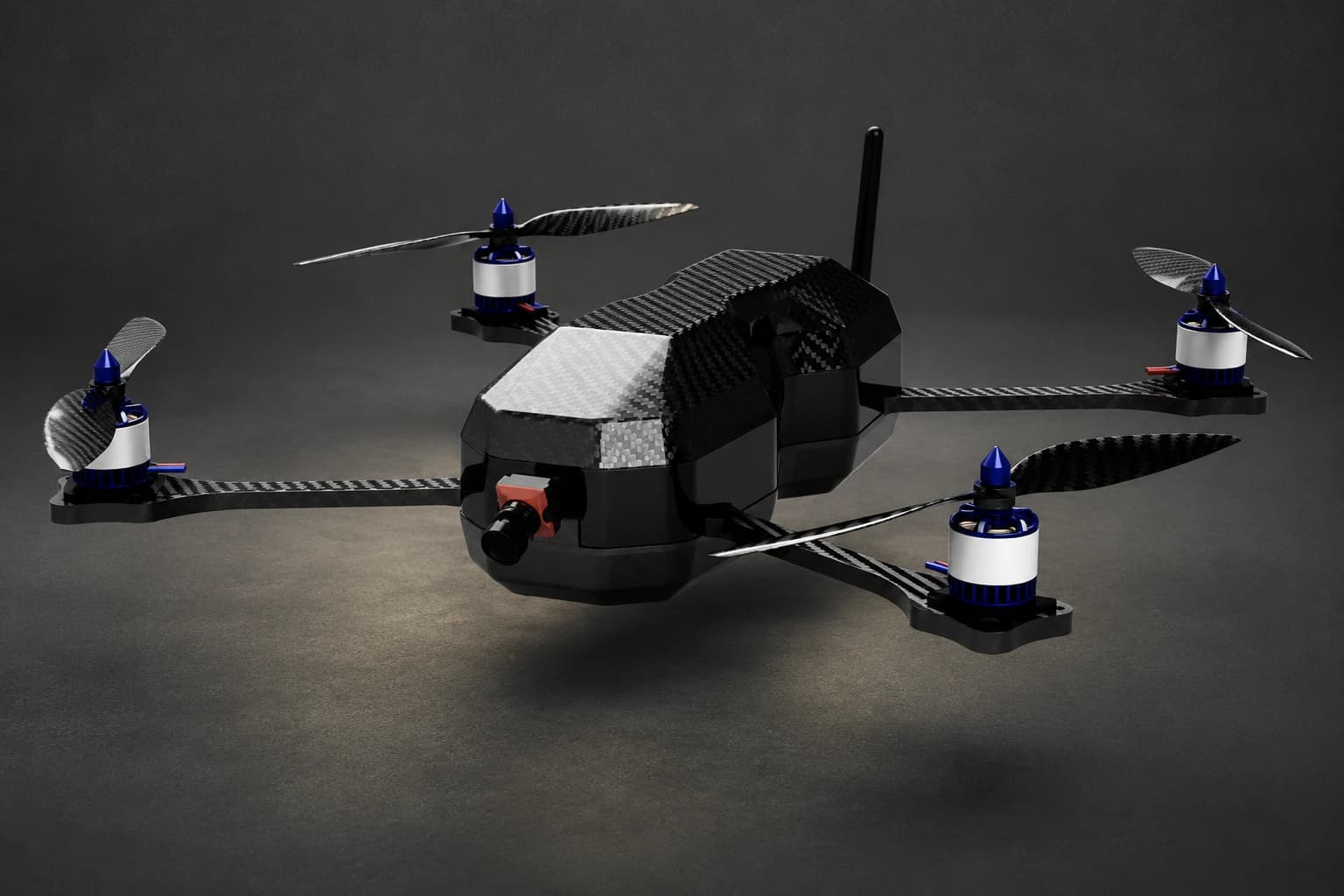
Carbon fiber laminates are strong, light and stiff — and also one of the more demanding materials to machine. The fibers are highly abrasive, the resin is sensitive to heat and the layered structure can split at the edges. Good results come from the right combination of tools, strategy and fixturing.
Why composites behave differently
- Abrasion: carbon fibers wear cutting edges quickly, so tools dull much faster than in aluminum.
- Heat: excessive heat softens or burns the resin matrix and damages the surface.
- Delamination and fraying: cutting forces can lift the outer plies or leave frayed fibers, especially on the top and bottom surfaces.
Tooling
Composite machining relies on carbide tools with wear-resistant coatings such as diamond coatings, or on polycrystalline diamond (PCD) tools for longer runs. Special composite geometries protect the laminate:
- Compression routers combine up-cut and down-cut flutes, pushing fibers inward from both surfaces to keep top and bottom edges clean.
- Burr or diamond-pattern routers cut fibers into fine chips with low cutting forces for trimming.
- Dedicated composite drills reduce push-out delamination at the hole exit.
Sharp tools are essential. A worn edge rubs instead of cutting, which increases heat and delamination, so tool condition must be monitored closely.
Cutting strategy
Parameters depend on laminate, thickness and tool, but some principles apply generally: keep the tool cutting rather than rubbing, avoid dwelling in one spot and use toolpaths that direct cutting forces into the material. Finishing passes with small stepovers give the best edges on visible parts.
Fixturing and support
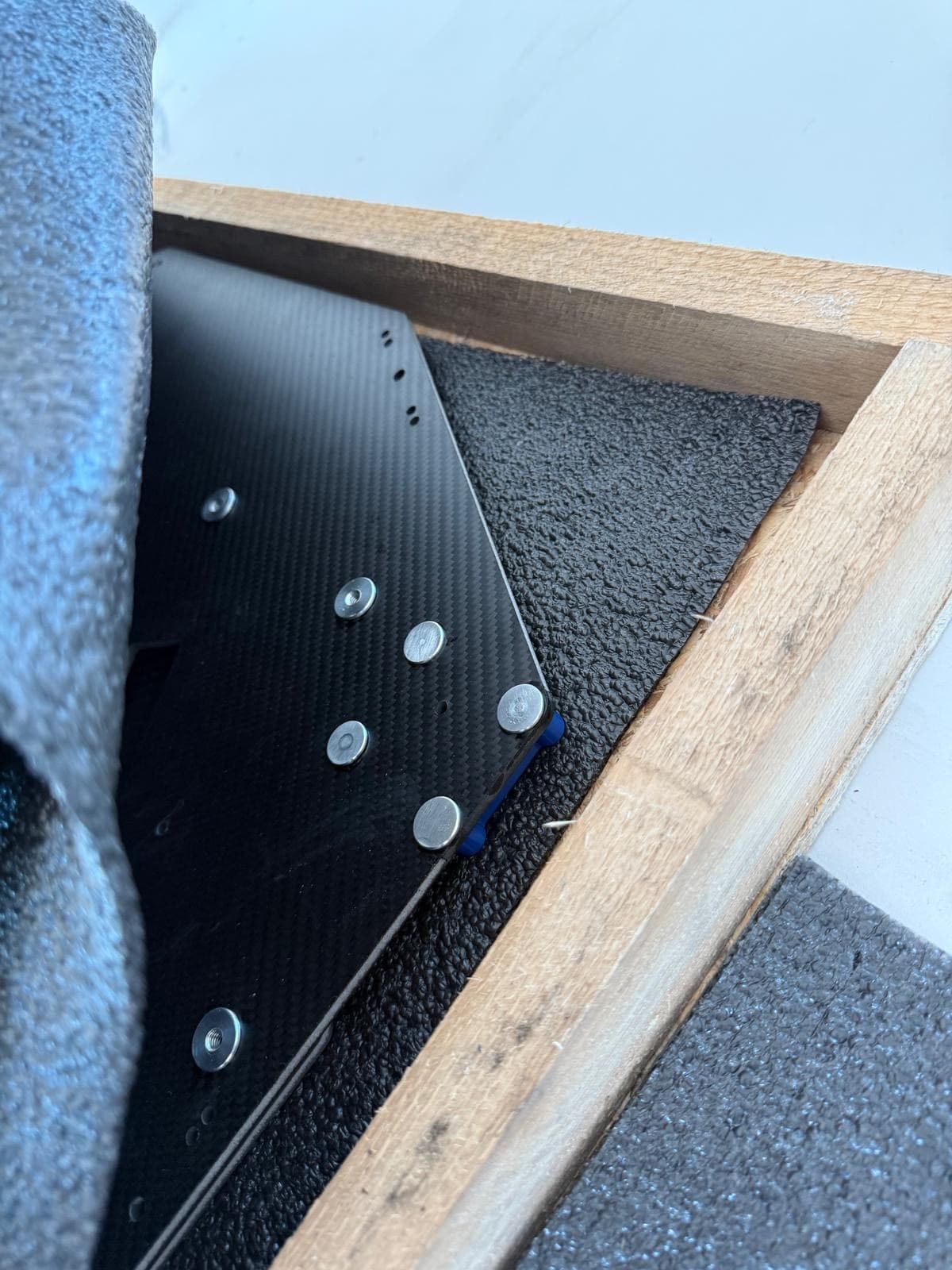
Thin laminates and sandwich panels vibrate easily. Vacuum tables, dedicated fixtures and sacrificial backing boards support the part, prevent chatter and protect the exit side of holes and cuts. For sandwich panels, the core must be supported so that it is not crushed by clamping forces.
Dust control and safety
Machining carbon fiber produces fine dust that must not be inhaled and is electrically conductive, so it can damage electrical equipment. Extraction at the tool, enclosed machines and appropriate personal protection are mandatory. Compressed air should never be used to clean parts or machines, because it spreads the dust.
CNC milling or waterjet?
Both processes have their place and complement each other:
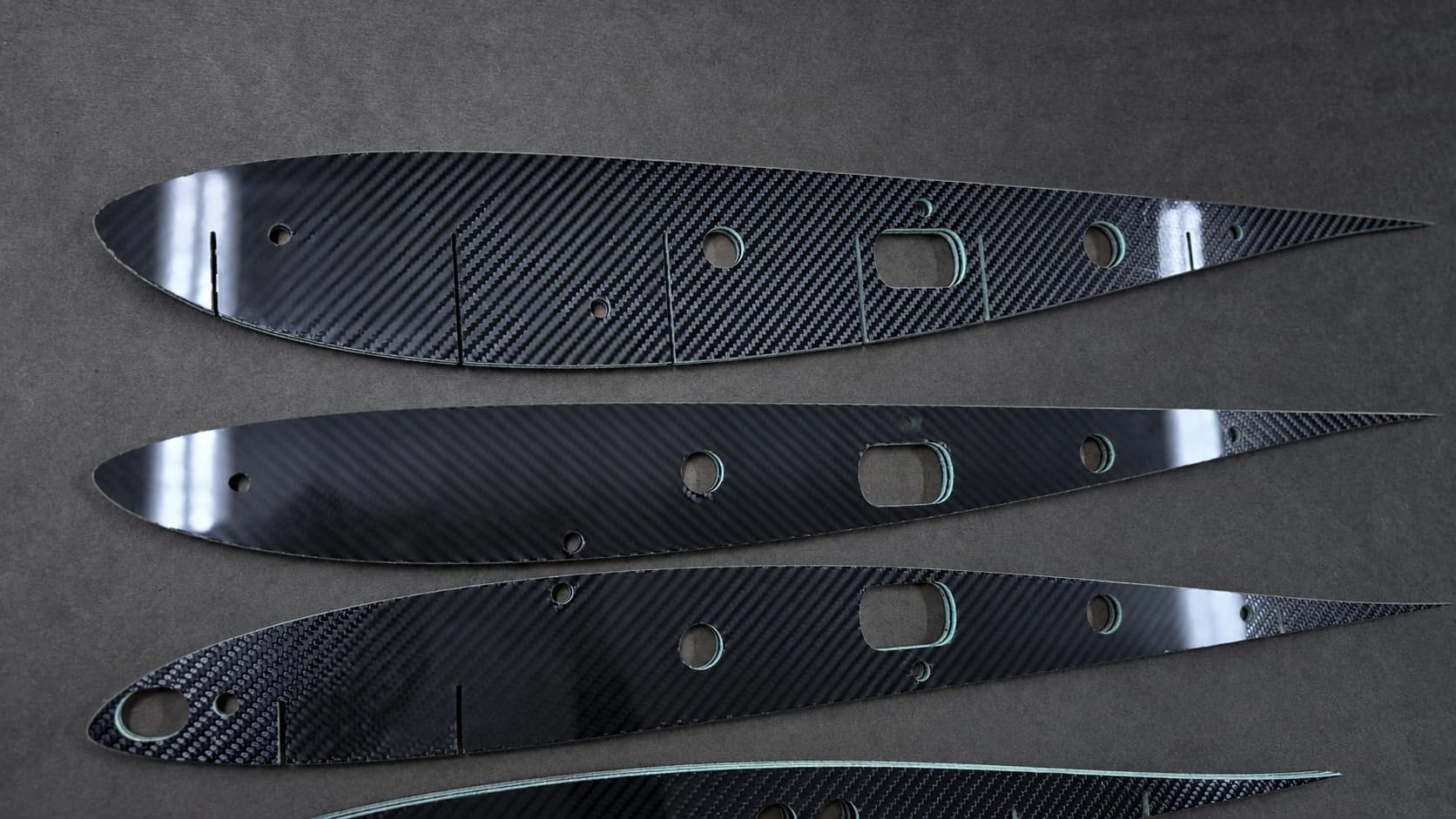
- Waterjet cutting is a cold process without heat input — ideal for flat plates, sandwich panels and complex 2D profiles.
- CNC milling is needed for 3D contours, pockets, chamfers, precise bores and trimming of molded parts.
At X CarbonTech we combine a 4-axis CNC mill with a 3 × 2 m work area and a dual-head waterjet with a 3 × 1.5 m cutting table. Depending on the geometry we choose one process — or combine both — to reach clean edges. Machining accuracy can reach 0.05 mm, depending on the material, geometry and process; we confirm the required tolerances for each part before production.
What to send for a machining quote
- 2D drawings (DXF, DWG, PDF) or 3D models (STEP, IGES)
- Material and thickness, or the laminate you require
- Tolerances and edge or surface requirements
- Quantity and timeline
Related capabilities
Discuss your application with an engineer
Questions about materials or processes for your part? We are happy to help.
Request a Quote