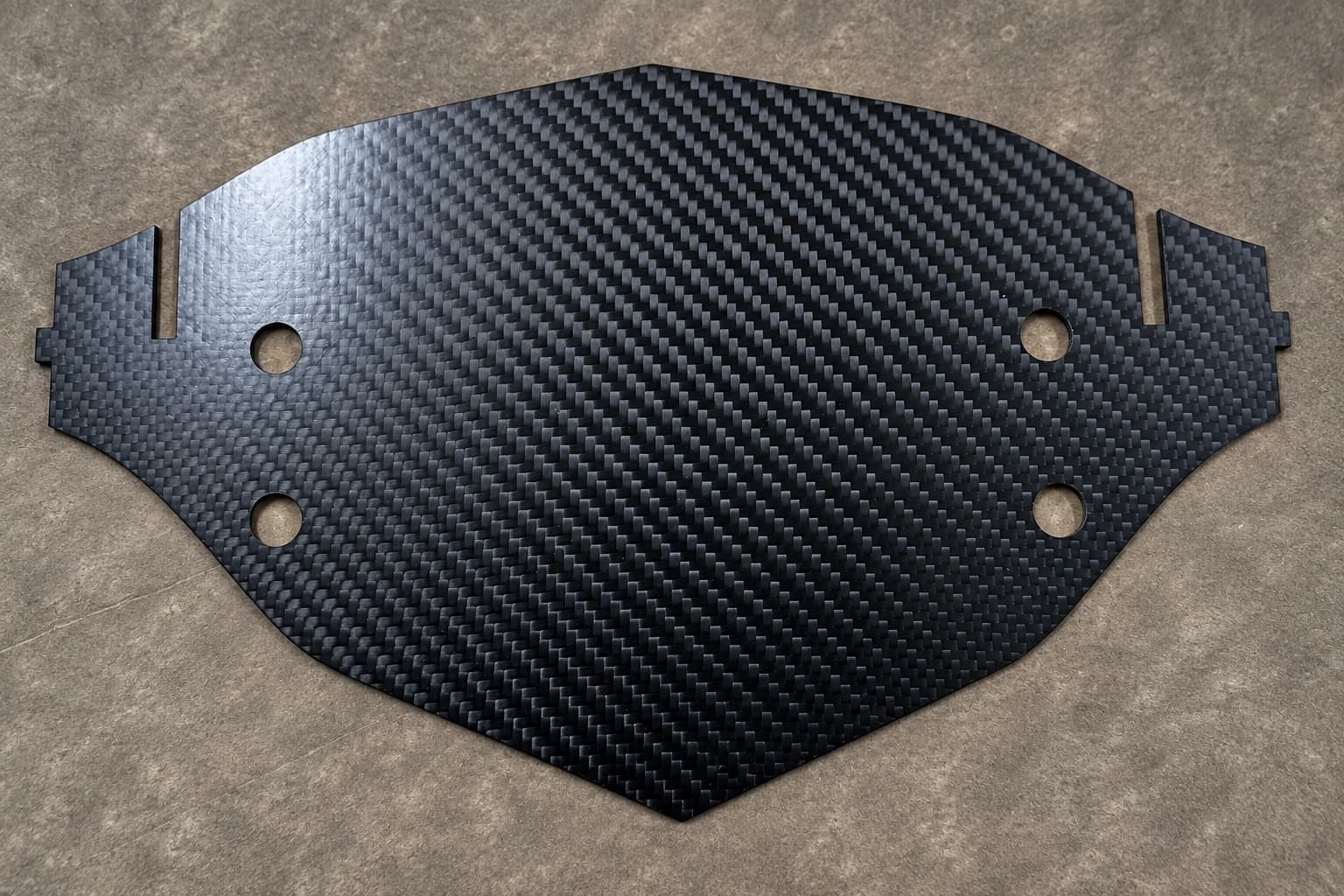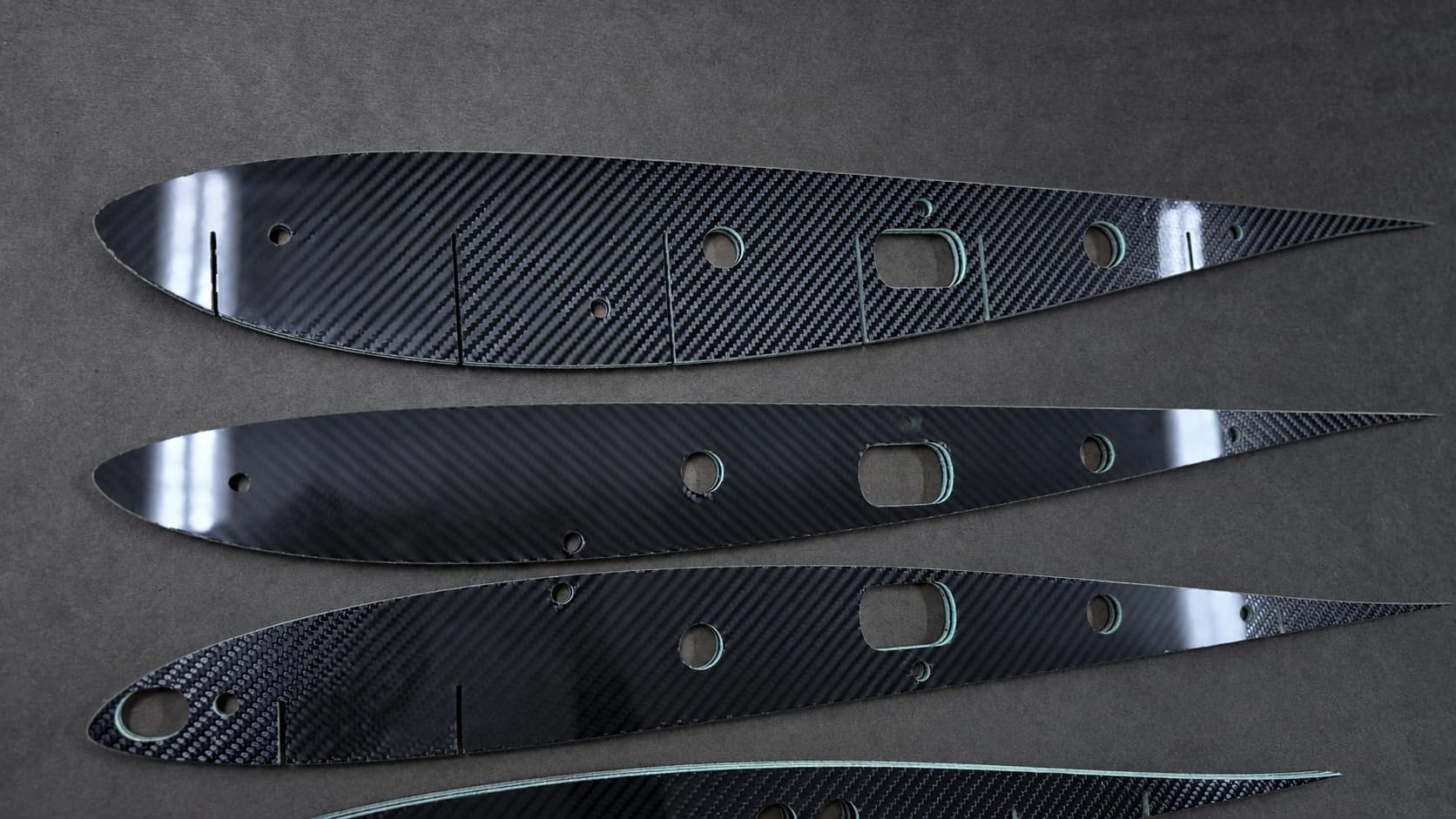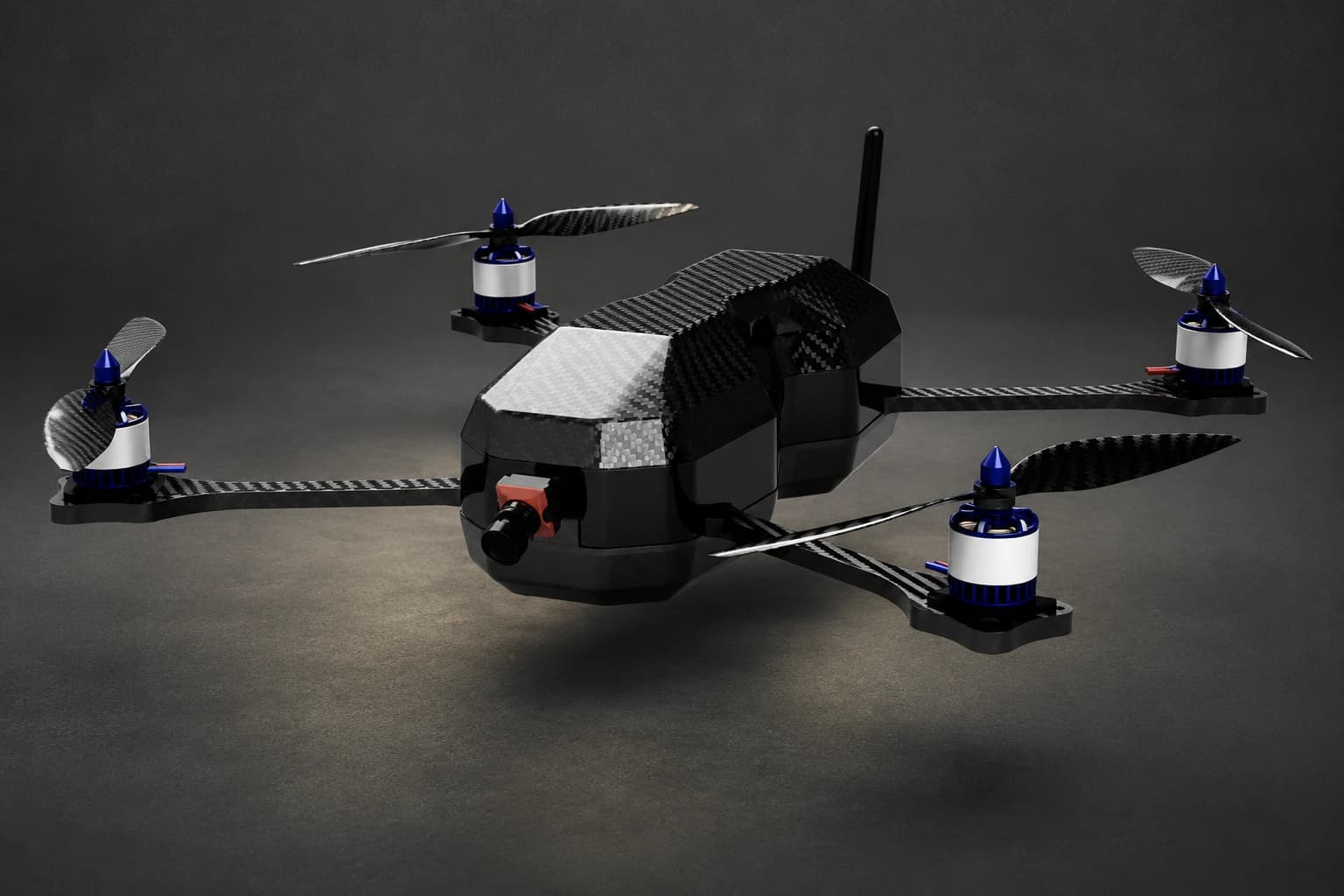
Many composite projects do not start with a drawing but with an existing part: a metal bracket that is too heavy, a plastic cover that keeps breaking, or a component that is no longer available. Reverse engineering turns that part into a producible carbon fiber component. This is how the process works.
Step 1 — Capture the geometry
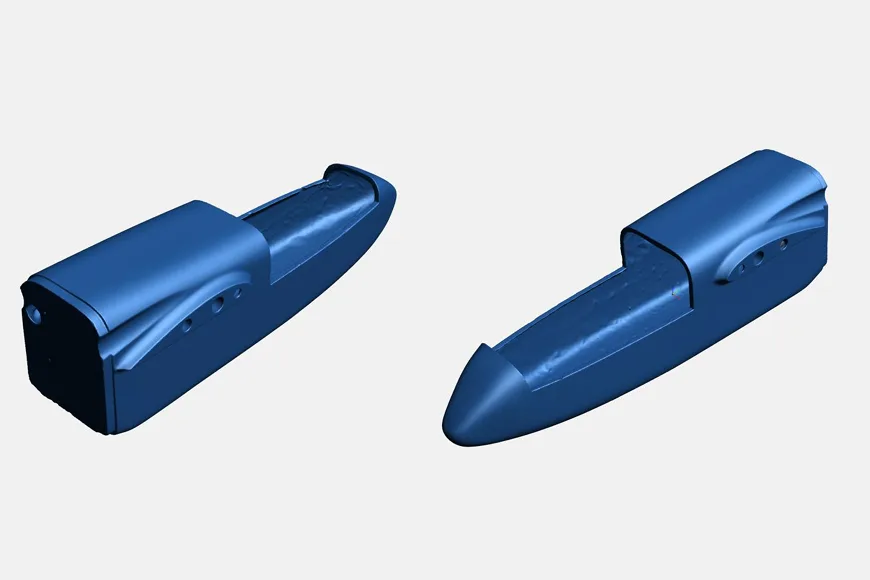
The part — and, just as importantly, the surfaces it mounts to — is captured with a 3D scanner. Mounting points, mating surfaces and clearances matter more than the exact shape of every surface, because they decide whether the new part will fit.
Step 2 — Rebuild a clean CAD model
A scan produces a mesh, not a design. The mesh is used as a reference to build a clean CAD model with defined surfaces, holes and interfaces. At this stage, wear, deformation and manufacturing defects of the original are corrected rather than copied.
Step 3 — Redesign for composites
A carbon part should not be a copy of a metal part. Composite design adapts the geometry to the material and the process:
- Wall thickness and laminate are defined for the actual loads.
- Draft angles and radii allow the part to be released from the mold.
- Flanges, ribs or sandwich sections provide stiffness instead of solid material.
- Inserts or local reinforcements carry bolt loads.
- Fiber orientation follows the main load paths.
Step 4 — Tooling
From the final CAD model the mold is designed — with parting lines, flanges and trim allowances — and CNC-machined. The quality of the mold surface defines the surface quality of every part produced from it.
Step 5 — Production and fit check
The first parts are laminated, trimmed and checked for fit against the original interfaces. Scanning the finished part and comparing it with the CAD model confirms that the geometry is right before series production starts.
Typical results
- A lighter replacement for a heavy metal or plastic part
- A reproducible part where no drawings exist
- A digital model and a mold that allow reorders at any time
What we need from you
- The original part, or detailed photos with key dimensions
- Information on how and where the part is mounted
- Loads, temperatures and the environment the part operates in
- Surface requirements (visible carbon, matte, gloss) and quantity
At X CarbonTech the complete workflow — 3D scanning, CAD reconstruction, composite engineering, mold making and production — happens under one roof, so one team is responsible from the original part to the finished carbon component.
Related capabilities
Discuss your application with an engineer
Questions about materials or processes for your part? We are happy to help.
Request a Quote